
MandarinGo.

MANDARINGO

HSK 4 reading and writing practice: 32 questions + 6 writing tasks

Practise 32 original reading questions and 6 open writing tasks without signing in. The 10 + 15 + 7 reading split and five picture sentences plus one composition follow the task counts in the checked HSK 3.0 level 4 sample. Every reading choice has an explanation; writing has references and a self-check.

What this practice covers

This is reading and writing section practice, not a complete 70-item written paper: listening and the separate speaking component are not included. The grouping, illustrations and feedback are MandarinGo’s own teaching design. There is no official score prediction or pass/fail result.

Start with the shared word banks, then read the passages and sentence gaps. Check answers after attempting each item, and write before opening the references. You can return to any section. This learning mode has no countdown.

Your reading and writing workspace

Answers and drafts are checked in this browser. They are not uploaded, sent to AI or saved to your account. Optional saving keeps a device copy. Copies are restored only within seven days of saving; expired copies are removed when this page is next opened. Avoid saving on shared devices.

The shared banks use six choices; the other reading questions use four. This page numbers its own questions R01–R32, corresponding to the reading section only.

Word bank A: time and responsibility

Choose from the shared six-word bank. Use each word at most once; one word is unused.

A. 提前 B. 准时 C. 耐心 D. 负责 E. 合适 F. 突然

R01. 电影七点开始。为了有时间取票,我们决定( )半小时到电影院。
Answer, evidence and every option explained

Answer: A. 提前

Evidence / language cue: 有时间取票;半小时

  1. 提前 — 提前 means earlier than the scheduled time; 半小时 states how much earlier.
  2. 准时 — 准时 means at the appointed time, not half an hour before it.
  3. 耐心 — 耐心 describes patience, not an arrival time.
  4. 负责 — 负责 concerns responsibility, not when to arrive.
  5. 合适 — 合适 means suitable; it cannot directly modify 半小时到 in this sentence.
  6. 突然 — 突然 describes an unexpected event, not a planned early arrival.
R02. 老师反复讲了三遍也不着急,还鼓励我继续问。他非常有( )。
Answer, evidence and every option explained

Answer: C. 耐心

Evidence / language cue: 反复讲了三遍也不着急

  1. 提前 — 有提前 is not a valid noun phrase here; 提前 marks doing something early.
  2. 准时 — 准时 is punctuality, and 有准时 is not the required phrase.
  3. 耐心 — 有耐心 is the natural phrase for remaining calm and helping repeatedly.
  4. 负责 — 负责 is a verb/adjective; 有负责 is not grammatical in this sentence.
  5. 合适 — 合适 is an adjective; 有合适 needs a following noun and does not fit this sentence.
  6. 突然 — 突然 does not name a quality after 有.
R03. 小王是这次活动的( )人,大家有问题可以直接找他。
Answer, evidence and every option explained

Answer: D. 负责

Evidence / language cue: 有问题可以直接找他

  1. 提前 — 提前人 is not the name of an organizing role.
  2. 准时 — 准时人 does not name the person in charge.
  3. 耐心 — 耐心人 is not the role noun needed here.
  4. 负责 — 负责人 is the person in charge; the contact instruction supports this role.
  5. 合适 — 合适人 lacks 的 and would mean a suitable person, not the stated role.
  6. 突然 — 突然人 is not a meaningful role noun.
R04. 这双鞋大小正好,走路也舒服,我觉得很( )。
Answer, evidence and every option explained

Answer: E. 合适

Evidence / language cue: 大小正好;舒服

  1. 提前 — 提前 concerns time, not how shoes fit.
  2. 准时 — 准时 describes punctuality and cannot evaluate shoes.
  3. 耐心 — 耐心 describes a person’s attitude, not shoes.
  4. 负责 — 负责 describes responsibility and does not describe fit.
  5. 合适 — 合适 evaluates the fit supported by 大小正好 and 舒服.
  6. 突然 — 突然 describes an unexpected event, not a suitable size.
R05. 通知规定九点到站,火车也正好九点到,因此可以说它( )到站。
Answer, evidence and every option explained

Answer: B. 准时

Evidence / language cue: 规定九点;正好九点

  1. 提前 — 提前 would mean arriving early, but the stated scheduled time is nine.
  2. 准时 — 准时到站 means arriving at the scheduled nine o’clock.
  3. 耐心 — 耐心 cannot describe the train’s arrival time.
  4. 负责 — 负责 cannot describe a train’s punctual arrival.
  5. 合适 — 合适 is an evaluation, not an adverb of punctual arrival here.
  6. 突然 — 突然 would indicate surprise, which the timetable context does not support.

Word bank B: learning and everyday choices

Choose from the shared six-word bank. Use each word at most once; one word is unused.

A. 经验 B. 坚持 C. 节约 D. 参加 E. 环境 F. 距离

R06. 关灯以后再离开教室,可以( )用电。
Answer, evidence and every option explained

Answer: C. 节约

Evidence / language cue: 关灯以后再离开

  1. 经验 — 经验 is experience, not an action performed on electricity use.
  2. 坚持 — 坚持用电 means continuing to use electricity, opposite to turning lights off to save it.
  3. 节约 — 节约用电 means conserving electricity, the purpose of switching off lights.
  4. 参加 — 参加 takes an activity, not 用电 as used here.
  5. 环境 — 环境 is a noun and cannot form 环境用电.
  6. 距离 — 距离 expresses distance, not saving electricity.
R07. 姐姐在医院工作了十年,照顾病人的( )很丰富。
Answer, evidence and every option explained

Answer: A. 经验

Evidence / language cue: 在医院工作了十年

  1. 经验 — 经验 is practical knowledge gained from ten years of work; 经验丰富 is a natural collocation.
  2. 坚持 — 坚持 is persistence, not the experience described as 丰富.
  3. 节约 — 节约 is saving resources, not professional experience.
  4. 参加 — 参加 describes participation and does not fit 丰富 here.
  5. 环境 — 环境 describes surroundings, not the knowledge gained through work.
  6. 距离 — 距离 is distance; it cannot be 丰富.
R08. 要看见进步,除了选对方法,还需要每天练习,长期( )下去。
Answer, evidence and every option explained

Answer: B. 坚持

Evidence / language cue: 每天练习;长期

  1. 经验 — 经验 is a noun and cannot take 下去 to mean continuing an action.
  2. 坚持 — 坚持下去 means continuing despite difficulty over time, matching 每天 and 长期.
  3. 节约 — 节约 needs a resource being saved; there is no such object here.
  4. 参加 — 参加 needs an activity; 参加下去 does not express maintaining daily practice here.
  5. 环境 — 环境 is not a verb that can take 下去.
  6. 距离 — 距离 is not a verb of continued effort.
R09. 学校周六举办运动会,你愿意报名( )吗?
Answer, evidence and every option explained

Answer: D. 参加

Evidence / language cue: 举办运动会;报名

  1. 经验 — 经验 is not the participation verb required after 报名.
  2. 坚持 — 坚持 does not mean signing up for this event.
  3. 节约 — 节约 means saving resources, not joining an event.
  4. 参加 — 报名参加 means signing up to take part; the object is the sports meeting.
  5. 环境 — 环境 is a noun for surroundings and does not fit after 报名.
  6. 距离 — 距离 concerns distance and cannot complete this invitation.
R10. 这家店里很安静,桌椅也干净,学习( )不错。
Answer, evidence and every option explained

Answer: E. 环境

Evidence / language cue: 很安静;桌椅也干净

  1. 经验 — 经验 refers to accumulated knowledge, not the quiet and cleanliness of a place.
  2. 坚持 — 坚持 is persistence and cannot name the conditions described.
  3. 节约 — 节约 refers to saving and does not describe a study setting.
  4. 参加 — 参加 is participation and does not form 学习参加.
  5. 环境 — 学习环境 means the conditions for studying; quiet and clean are evidence.
  6. 距离 — 学习距离 is not the concept supported by quiet tables and chairs.

A library notice

Read the passage and choose one answer for each question.

从下周一开始,社区图书馆每周三延长开放时间,晚上九点才关门,其他日子仍是六点关门。新增加的三个小时只开放一楼阅览室,可以看书、自习,但不能办理借书和还书。想借书的读者,请在六点以前到二楼服务台。
R11. 想在周三晚上七点去图书馆的人,可以做什么?
Answer, evidence and every option explained

Answer: A. 在一楼自习

Evidence / language cue: 可以看书、自习,但不能办理借书和还书

  1. 在一楼自习 — The extra hours open the first-floor reading room for reading and study.
  2. 在二楼借书 — Borrowing must be completed before six; the second-floor desk is not open at seven.
  3. 办理还书 — The notice explicitly excludes returns during the extra hours.
  4. 参加免费的课程 — No course is mentioned, and free access does not imply a class.
R12. 下周二图书馆几点关门?
Answer, evidence and every option explained

Answer: B. 晚上六点

Evidence / language cue: 其他日子仍是六点关门

  1. 下午三点 — Three is the number of added hours on Wednesday, not Tuesday’s closing time.
  2. 晚上六点 — Tuesday is one of the other days, which still close at six.
  3. 晚上七点 — Seven appears only in the previous question, not in the notice’s timetable.
  4. 晚上九点 — Nine applies only to Wednesday from next week.
R13. 这份通知主要提醒读者什么?
Answer, evidence and every option explained

Answer: C. 周三延长时间,但服务有限

Evidence / language cue: 只开放一楼阅览室

  1. 图书馆将搬到一楼 — Opening a reading room on the first floor is not moving the whole library.
  2. 所有服务都会延长三小时 — Only the reading room extends its hours; borrowing and returns do not.
  3. 周三延长时间,但服务有限 — The change includes both Wednesday’s longer hours and limits on services.
  4. 以后只能在晚上借书 — Borrowing is available before six, not only at night.

A walking trip changes

Read the passage and choose one answer for each question.

周六的步行活动原计划八点在公园南门集合。由于上午可能下大雨,领队把活动改到下午两点,集合地点不变。已经报名的人不用重新报名;如果不能参加,请在周五晚上八点前发消息给领队。参加者需要自己带水,午饭在集合前自行解决。
R14. 活动调整后的集合安排是什么?
Answer, evidence and every option explained

Answer: D. 周六下午两点,公园南门

Evidence / language cue: 改到下午两点,集合地点不变

  1. 周六八点,公园南门 — Eight was the original time and has been changed.
  2. 周六两点,公园北门 — The time is right but the gate is wrong; the meeting place is unchanged.
  3. 周五八点,公园南门 — Friday eight is the cancellation deadline, not the meeting time.
  4. 周六下午两点,公园南门 — The new time is two in the afternoon, and the unchanged location is the south gate.
R15. 已经报名但不能参加的人应该怎么办?
Answer, evidence and every option explained

Answer: A. 周五晚上八点前告诉领队

Evidence / language cue: 如果不能参加,请在周五晚上八点前发消息给领队

  1. 周五晚上八点前告诉领队 — The passage gives a Friday 8 p.m. deadline for notifying the leader.
  2. 周六两点以后重新报名 — Registered participants do not re-register; this does not report nonattendance.
  3. 到公园北门等候 — The north gate is not a meeting point and waiting does not notify the leader.
  4. 请领队准备午饭 — Lunch is arranged individually before meeting; it is unrelated to cancellation.
R16. 关于天气,材料确定说了什么?
Answer, evidence and every option explained

Answer: B. 上午有下大雨的可能

Evidence / language cue: 上午可能下大雨

  1. 周六全天一定下雨 — 可能 is a possibility about the morning, not certainty for the whole day.
  2. 上午有下大雨的可能 — The notice says the morning may have heavy rain, preserving uncertainty.
  3. 下午绝对不会下雨 — No guarantee about afternoon weather is given.
  4. 领队已经取消活动 — The activity has been moved to the afternoon, not cancelled.

Repairing a bicycle

Read the passage and choose one answer for each question.

小陈的自行车后轮没气了。他原以为要换一个新轮子,便推着车去了修车店。师傅检查后说,只要换里面的小零件就行,十分钟就能修好。小陈花了二十元,骑车离开时觉得很高兴:不仅省了钱,也学会了以后怎样检查轮胎。
R17. 小陈去修车店之前怎么想?
Answer, evidence and every option explained

Answer: C. 可能需要换新轮子

Evidence / language cue: 原以为要换一个新轮子

  1. 只需给车洗一洗 — Washing is not connected to his stated concern about the flat tire.
  2. 修车一定免费 — No free repair was expected or promised.
  3. 可能需要换新轮子 — He originally thought he would need a new wheel; the mechanic later corrected this.
  4. 自己已经找到了小零件的问题 — The mechanic found the small-part issue after inspection, not Xiaochén beforehand.
R18. 这次实际怎么修好车的?
Answer, evidence and every option explained

Answer: D. 换了里面的小零件

Evidence / language cue: 只要换里面的小零件就行

  1. 换了整辆车 — He left on his repaired bicycle, not a new bicycle.
  2. 换了一个新轮子 — Replacing a whole wheel was his first assumption, not the actual repair.
  3. 只调整了座位 — The passage describes an inner part, not a seat adjustment.
  4. 换了里面的小零件 — The mechanic says an inner small part is all that needs changing.
R19. 小陈高兴的原因是什么?
Answer, evidence and every option explained

Answer: A. 省了钱,还学会检查轮胎

Evidence / language cue: 不仅省了钱,也学会了以后怎样检查轮胎

  1. 省了钱,还学会检查轮胎 — The final sentence gives both saving money and learning to check tires.
  2. 买到了最贵的自行车 — He paid for a repair; the passage says nothing about buying an expensive bicycle.
  3. 以后再也不用修车了 — Learning to check a tire does not guarantee no future repairs.
  4. 师傅送了他一个新轮子 — The small part was replaced for twenty yuan; no free wheel was given.

Trying a short lunchtime lesson

Read the passage and choose one answer for each question.

公司以前把电脑培训安排在下班以后,许多同事因为要接孩子,常常不能参加。这个月,人事部试着把课程改成午休时的二十分钟小课,每周两次。参加完全自愿,课程录像也会发到内部网站。一个月后,人事部将收集意见,再决定是否继续。
R20. 以前一些同事为什么不能参加培训?
Answer, evidence and every option explained

Answer: B. 下班后要接孩子

Evidence / language cue: 因为要接孩子

  1. 培训地点太远 — Distance is not stated as a reason.
  2. 下班后要接孩子 — The passage explicitly says they had to pick up their children after work.
  3. 公司不允许他们参加 — The company offered training; it did not prohibit participation.
  4. 课程只能在网站上看 — Recordings are part of the new arrangement, not the stated old obstacle.
R21. 新课程有什么特点?
Answer, evidence and every option explained

Answer: C. 每周两次,也能看录像

Evidence / language cue: 每周两次;课程录像也会发到内部网站

  1. 每天两次,每次一小时 — The notice says twice a week and twenty minutes, not twice daily for an hour.
  2. 必须参加,否则不能下班 — Participation is voluntary, with no stated restriction on leaving work.
  3. 每周两次,也能看录像 — The new format combines two weekly sessions and internal recordings.
  4. 只给有孩子的同事上课 — Children explain the scheduling issue, not a restriction on eligibility.
R22. 人事部已经确定了什么?
Answer, evidence and every option explained

Answer: D. 一个月后收集意见再决定

Evidence / language cue: 一个月后,人事部将收集意见,再决定是否继续

  1. 新课程会永远继续 — Continuation is a future decision, not a permanent commitment.
  2. 所有同事都满意 — Feedback has not yet been collected, so universal satisfaction is unsupported.
  3. 下个月取消电脑培训 — Cancellation has not been decided either.
  4. 一个月后收集意见再决定 — The plan is to collect views after a month and then decide whether to continue.

A neighborhood book exchange

Read the passage and choose one answer for each question.

换书活动要求每位参加者带一到三本保存完好的书,不能带课本和杂志。工作人员检查后,每本书换一张书票;一张书票可以选择一本别人的书。书票仅限当天使用,不能换现金。如果当天没有找到喜欢的书,也不能把已交出的书取回。
R23. 哪种情况符合参加要求?
Answer, evidence and every option explained

Answer: A. 带两本保存完好的小说

Evidence / language cue: 一到三本保存完好的书,不能带课本和杂志

  1. 带两本保存完好的小说 — Two well-kept novels fit the one-to-three limit and are neither textbooks nor magazines.
  2. 带四本新的小说 — Four exceeds the stated maximum of three.
  3. 带一本课本和一本杂志 — Both textbooks and magazines are excluded.
  4. 什么书也不带,只领书票 — Tickets are issued in exchange for accepted books, not simply for arriving.
R24. 带来的三本书全部通过检查,能领几张书票?
Answer, evidence and every option explained

Answer: B. 三张

Evidence / language cue: 每本书换一张书票

  1. 一张 — One ticket is given per book, not per participant.
  2. 三张 — Three accepted books give three tickets at one ticket per book.
  3. 六张 — There is no two-ticket-per-book rule.
  4. 数量由喜欢的书决定 — Tickets depend on accepted books brought in, not books later selected.
R25. 如果当天没找到喜欢的书,可以怎样处理书票?
Answer, evidence and every option explained

Answer: C. 当天再看看其他书

Evidence / language cue: 书票仅限当天使用;不能把已交出的书取回

  1. 下次活动再用 — Tickets are valid only that day, so saving them for another event is excluded.
  2. 换成现金 — The notice explicitly says tickets cannot be exchanged for cash.
  3. 当天再看看其他书 — The ticket remains usable that day; looking for another book follows the stated rules.
  4. 换回原来交出的书 — Submitted books cannot be taken back even if no suitable replacement is found.

Sentence gaps: follow the connection

Choose the sentence that completes each original paragraph. Use only information supported by its context.

R26. 小李刚到新城市时,每次买菜都去离家很远的大超市。后来邻居带他去了附近的菜市场。( )从那以后,他很少再坐车去买菜了。
Answer, evidence and every option explained

Answer: D. 那里走路五分钟就到,菜也新鲜

Evidence / language cue: 附近的菜市场;很少再坐车

  1. 邻居从来不买菜 — The neighbor showing him the market does not support never buying vegetables.
  2. 超市决定搬到别的城市 — The text does not say the supermarket moved; this adds an unsupported event.
  3. 他不喜欢在家做饭 — Disliking cooking would not explain switching to the nearby market.
  4. 那里走路五分钟就到,菜也新鲜 — A close, fresh market explains why he no longer needs a vehicle to buy vegetables.
R27. 小周练习做面包时,第一次把水放多了,第二次又忘了看时间。他把每次的问题记在本子上,再改一次。( )这次家人都说很好吃。
Answer, evidence and every option explained

Answer: A. 第三次,他终于做出了满意的面包

Evidence / language cue: 每次的问题记在本子上,再改一次

  1. 第三次,他终于做出了满意的面包 — The third attempt links two earlier failures and deliberate adjustment to the successful taste test.
  2. 所以他决定再也不做面包 — Giving up contradicts 这次 and the family tasting the new bread.
  3. 本子上的字突然全不见了 — Disappearing writing is unrelated and unsupported.
  4. 家人一直不知道他在学做面包 — What the family knew does not bridge the improvement and this successful batch.
R28. 活动室的椅子很重。大家原来打算让小张一个人搬到楼下。老师发现后,请另外三名同学一起帮忙。( )不到十分钟,椅子就全搬好了。
Answer, evidence and every option explained

Answer: B. 四个人分工合作,速度快了很多

Evidence / language cue: 另外三名同学一起帮忙;不到十分钟

  1. 小张因此一个人搬得更慢了 — He is no longer alone, and slower work conflicts with completion in under ten minutes.
  2. 四个人分工合作,速度快了很多 — Xiaozhang plus three classmates makes four; cooperation explains the quick completion.
  3. 大家把椅子留在楼上,什么也没做 — Doing nothing contradicts all chairs having been moved.
  4. 老师让其他同学马上回家 — Sending helpers home reverses the teacher’s request and does not explain the quick result.
R29. 小林想参加周日晚上的读书会,但那天要加班。他先问组织者能不能在网上参加,得到肯定回答后,才报了名。( )他也按时参加了讨论。
Answer, evidence and every option explained

Answer: C. 虽然没有到现场,他还是在电脑前听完了分享

Evidence / language cue: 能不能在网上参加;得到肯定回答

  1. 他为此辞掉了工作 — Quitting his job is not mentioned and is unnecessary given online attendance.
  2. 组织者取消了所有网上活动 — Cancelling online attendance conflicts with the organizer’s affirmative answer.
  3. 虽然没有到现场,他还是在电脑前听完了分享 — Remote listening explains how he participated without going to the venue.
  4. 所以他整晚都没有打开电脑 — Not using a computer all evening fails to connect the online plan with his attendance.
R30. 王阿姨给阳台上的花每天浇两次水,可叶子反而越来越黄。花店老板看了照片,说这种花不需要那么多水。( )过了两个星期,新的绿叶长出来了。
Answer, evidence and every option explained

Answer: D. 她按建议减少了浇水次数

Evidence / language cue: 不需要那么多水;新的绿叶

  1. 她把所有花送给了老板 — Giving away all the plants is unsupported and would not follow the watering advice.
  2. 她马上增加到每天浇四次水 — Watering even more goes against the advice that the plant needs less water.
  3. 她只把花盆换成了红色 — Changing pot color does not address the excessive watering identified.
  4. 她按建议减少了浇水次数 — Reducing watering follows the advice and connects it to the later new leaves.
R31. 车站入口排起了长队。广播提醒乘客,东边还有一个入口,也可以进站。小马听后,带着行李向东走。( )他很快就通过了检查。
Answer, evidence and every option explained

Answer: A. 那边等候的人少得多

Evidence / language cue: 东边还有一个入口;很快就通过

  1. 那边等候的人少得多 — A shorter queue at the other entrance explains getting through quickly.
  2. 他决定回家不坐车了 — Returning home conflicts with passing the station check.
  3. 广播说东边入口已经关闭 — Closure contradicts the announcement that the east entrance can be used.
  4. 他把行李留在原地就离开了 — Leaving luggage behind contradicts 带着行李向东走 and adds unsupported behavior.
R32. 班长在群里通知大家周三交作业,但老师实际要求的是周四。一位同学发现后,私信提醒了他。( )大家于是按正确的时间准备。
Answer, evidence and every option explained

Answer: B. 他马上在群里更正日期,并说明刚才写错了

Evidence / language cue: 私信提醒;大家于是按正确的时间准备

  1. 他把这位同学从群里删掉了 — Removing a classmate would not communicate the correct deadline to everyone.
  2. 他马上在群里更正日期,并说明刚才写错了 — Correcting the group notice lets everyone prepare for the real Thursday deadline.
  3. 他决定以后再也不发通知 — Never sending notices again does not correct the existing misinformation.
  4. 他只在自己的本子上改了日期 — A private notebook change cannot explain how everyone learned the correct time.

Reading accuracy counts each of the 32 items once. Writing is reviewed separately and is never included as zero in a combined score. This is a learning check, not an official result.

Writing: five picture sentences and one composition

For W01–W05, describe the picture in one complete sentence using the given word. Different natural answers are welcome. The illustrations are original diagrams; alt descriptions support readers who cannot see them.

W01. Use 骑
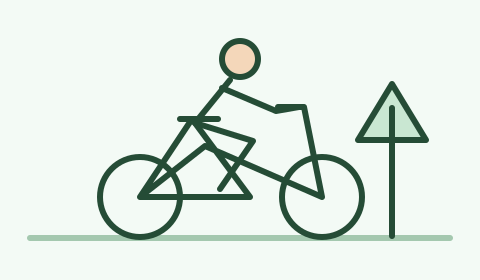
A person rides a bicycle along a park path.Counter available when JavaScript is enabled.
Possible responses and self-check

他在公园里骑自行车。

他骑着自行车经过公园。

Name the rider, use 骑 with 自行车, and describe what the picture supports. 在公园里 can precede the verb. The alternative uses 骑着 to show an ongoing manner of movement. Do not invent a purpose such as going to work.

W02. Use 浇

A person holds a watering can above a potted plant; water falls toward the plant.Counter available when JavaScript is enabled.
Possible responses and self-check

她正在给阳台上的花浇水。

她拿着水壶给花浇水。

Use the collocation 浇水. 给花 identifies what receives the water. 正在 is one valid way to show an action in progress; it is not required. Do not use 喝水 for watering a plant.

W03. Use 整理

A person moves a book from a desk toward a bookshelf with several upright books.Counter available when JavaScript is enabled.
Possible responses and self-check

他正在整理书架上的书。

他把桌上的书放回书架,认真地整理起来。

整理 describes putting things in order. Name 书 or 书架 as the object; 桌子上的 and 书架上的 identify different locations. A 把 sentence is possible, but the task does not require it.

W04. Use 一起

Two people walk under one open umbrella while rain falls.Counter available when JavaScript is enabled.
Possible responses and self-check

他们一起打着伞往前走。

下雨了,两个人一起撑着一把伞。

一起 describes a shared action and normally precedes the verb. The single umbrella supports 一把伞. Their relationship and destination are not shown, so either should be omitted or clearly treated as an optional story detail.

W05. Use 比

Two people stand side by side on the same ground line. The person on the left is visibly taller.Counter available when JavaScript is enabled.
Possible responses and self-check

左边的人比右边的人高。

右边的人比左边的人矮。

Use A 比 B + adjective and keep the comparison direction correct. 高 and 矮 produce two valid opposite perspectives. The picture gives no scale, so do not claim an exact difference in centimeters.

W06. A change of plan

Write at least 80 Chinese characters about a time you changed a plan. Describe the original plan, why it changed, what you did and the result. A true or imagined experience is acceptable.

Counter available when JavaScript is enabled.
Possible responses and self-check

上周六,我原来打算和朋友去公园骑自行车。出门前突然下起了大雨,我们只好改变计划。朋友建议去附近的图书馆,我觉得不错,就先在网上查了开放时间。到了图书馆,我们各选了一本喜欢的书,安静地读了两个小时。虽然没能骑车,但我们都觉得这个下午过得很有意思。我发现,计划改变以后,也可能有新的收获。

Check four pieces of information: original plan, reason for change, new action and result. Use connectors only where their meaning fits: 原来… / 只好… / 虽然…但…. The reference is one possible story, not a text to memorize. A different outcome, including an unsuccessful change, can be equally valid.

  • The reader can identify all four requested facts.
  • Time order is clear and people, places and quantities stay consistent.
  • Each sentence has a clear action or description; connectors match the relation.
  • Review missing characters, repeated words and punctuation. The counter is a learning aid, not an official score.

The counter counts Han characters only, excluding punctuation, spaces, Latin letters and digits. It is a transparent practice aid, not a confirmed official character-counting or marking rule. The keyword reminder does not judge grammar or meaning.

Sources and verification

References checked: